Archive
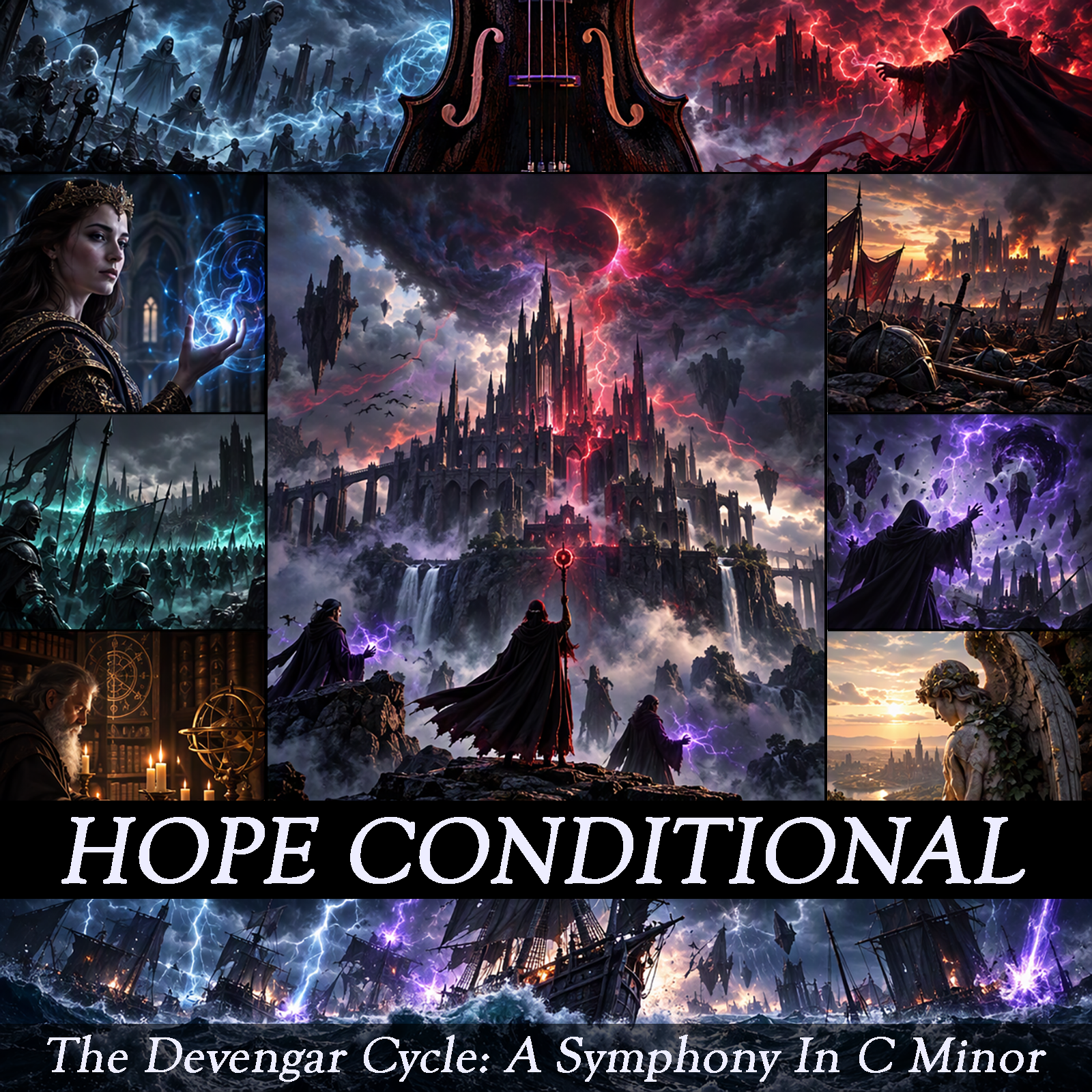
The Devengar Cycle: A Symphony In C Minor
After the work I did in Baroque styles for A Shattered Trinity, I wanted to explore more emotion-driven composing rather than subjecting myself to a list of predefined styles and key patterns. I like A Shattered Trinity a lot, but at times composing it felt oddly limited. I wanted to try more to tell a story, with more layers and themes. I wanted to build moods as much as structure.
I also needed a story, as I always work best from a story or outline, especially when writing music. And I realized I had one. Much like my attempts to turn my son’s Zombie Chronicles into a soundtrack, I remembered something I had written more than 15 years ago: the first 6 chapters of what I wanted to turn into a Fantasy trilogy. It opened with a grandiose battle on the edges of a volcanic island, between sorcerers. In that world, magic was defined by an ability to control electromagnetism; those were the rules I wanted to follow despite the characters not understanding the science. In theory, if one could control the electrical impulses of another’s brain waves, then, well, evil such as mind control could conceivably exist.
I never finished the novel. So I took it and turned it into a Romantic-era symphony. I had no idea though it would turn into a 2 hour behemoth.
The symphony takes us from the introduction of Devengar to the assassination of its Empress to the chase and eventual hunting down of the villain. Battles ensue, and evil is ultimately vanquished…but is it? How do the leaders of Devengar know for sure that evil will not return? The world is fundamentally changed.
Told across 5 acts and 26 musical pieces, there are some highlights. Funeral Imperial is a moving ode to our Empress; Shockwave has no key; Mind Control features a closing chord with every note of the chromatic scale; Vow Of Pursuit calls the heroes to battle; Do Not is in 15/16; and I still do play some with traditional structures, such as the Fugue-infused Final Council.
It’s an ambitious work, to be sure, but I learned a ton, and I can tell because I’m already excited to take what I learned from this one and apply it to the next. But that’s next year.
You can learn more about this album here.
Available on Spotify, YouTube, and Amazon Music.
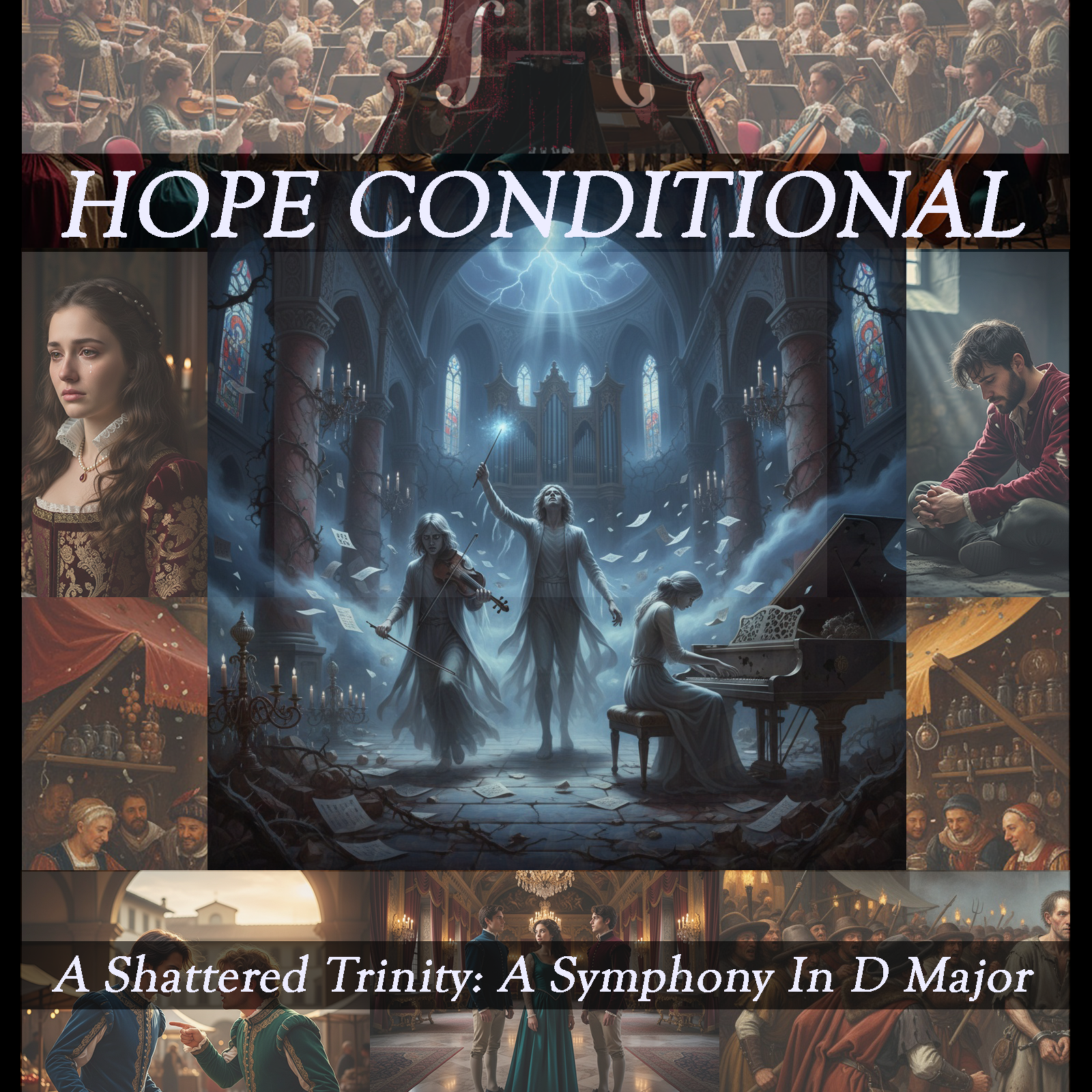
A Shattered Trinity: A Symphony In D Major
I’ve always wanted to write a full symphony. I like the structures, I like the idea of having to compose for such a large group of instruments, and I like the flexibility I get beyond my more guitar based influences, although I also enjoy writing songs in that mode. So one day I asked ChatGPT to describe for me an example structure for a Baroque style symphony. That outline led to my most recent work.
There were song structures I’d never heard of, tempos I’d never composed in, time signatures I’d never thought to attempt despite my foray into odd meter on nearly every album I’ve published. Any other time I’ve tried to start an idea like this I’ve experienced writer’s block trying to come up with compelling themes, especially considering I didn’t quite understand how to use themes in classical music in the first place. But I recalled a simple bit of melody from Servings Of Sadness that had come to me as I sang it to myself while making lunch, and decided if it was compelling enough to be sung, it would be a compelling enough start. That six note motif became the Motto, the base, for the set of themes I crafted for my symphony, including a theme each for the two protagonists, a Love Theme, a Battle theme, and more.
I found many of the structures limiting at first; fugues in particular with their predefined key changes were difficult. On occasion I would get stuck, and when I couldn’t get myself out, I’d take some advice from ChatGPT on potential solutions. Eventually, the story became evident: two young men, friends in fact, fall for the same young woman in a Renaissance era city filled with festivals and joy. The city itself is a character, an observer, to a tragic tale of love and loss.
Three concertos and an orchestral suite later, A Shattered Trinity is born.
You can learn more about this album here.
Available on Spotify, YouTube, and Amazon Music.
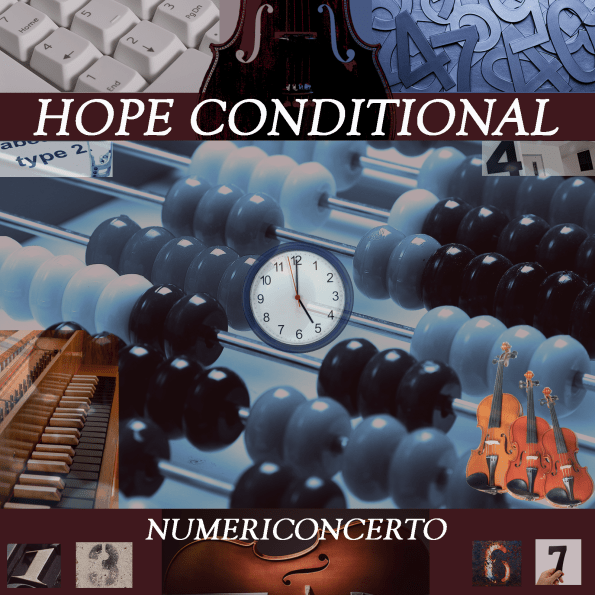
Numericoncerto
If you like classical music, in particular using strings and harpsichords, you might want to check out my Numericoncerto. I wrote this over the course of a year from late 2023 to late 2024. I challenged myself to step out of my symphonic rock comfort zone as a composer and try to write a serviceable piece of classical music.
As my writing progressed, I settled on 4 different elements. One, a sonata, a three part classical piece using strings. Second, a counterpoint quartet, exploring the musical idea of counterpoint, also using strings. Third, I brought in a harpsichord as an additional instrument, and wrote a quintet centered on feelings brought about by relationships. And last, I wrote a sextet, taking inspiration from a video I watched outlining Baroque chord structures, and then melding that with my interest in science fiction and fantasy movies, such as Star Trek or the Avengers.
With those in progress, I was also experimenting with fugues and other shorter pieces, and decided I wanted to bring in transition pieces, which I called “Vignettes”, to bridge between each of the main pieces. I was actually very happy with the result, keeping track length to a minimum while not sacrificing the integrity of the piece.
Other experimentations included a track written in quartal harmony, and a variety of alternate time signatures and key changes.
You can learn more about the overall release here.
Available on Spotify, YouTube, and Amazon Music.
Be welcome and true.