Medical Technology Update – The OmniPod 5
One of the more interesting psychological challenges I’ve had during my time as a diabetic has been an underlying belief that any change in treatment was to be considered a failure. When you are actively managing an illness in the way diabetes requires, your vigilance, resilience, and willpower are constantly at risk. For quite a while now I’ve resisted the idea of using an insulin pump rather than giving myself 4 to 5 injections a day; it felt like all of the effort I’d put in the last several years to get myself basically “normal” blood sugar wise just hadn’t been enough, and that I’d still failed.
This was especially true early in my battle, before 2018, when I found a new doctor and was first exposed to continuous glucose monitoring systems such as the Dexcom I still wear to this day. I’ve spoken about this in two earlier blog posts, one from that period in 2018 and one earlier this year that updated my technology usage and its success. Before that, cycling through doctors and medications and periods of simply bad health had left me feeling as though I was in a losing battle.
That feeling can be hard to shake even when one succeeds for a sustained period of time.
For the past few years my doctor, who is incredible, has asked about possibly using an insulin pump. There are several benefits, including no longer needing to carry insulin pens when out and about. I had always resisted because of the seeming permanence of a device, as well as the psychological acknowledgement that we’ve crossed another line in our defense, potentially the last line. One step closer to failure. In addition, most modern insulin pumps require tubes, and that just felt…overreaching.
Two months ago at my quarterly check in, my doctor again asked about using a pump, and mentioned there was a new kind of pump that was compatible with my Dexcom and did not use tubing. The OmniPod 5, while relatively new, was constructed for people with both Type I and Type II Diabetes.
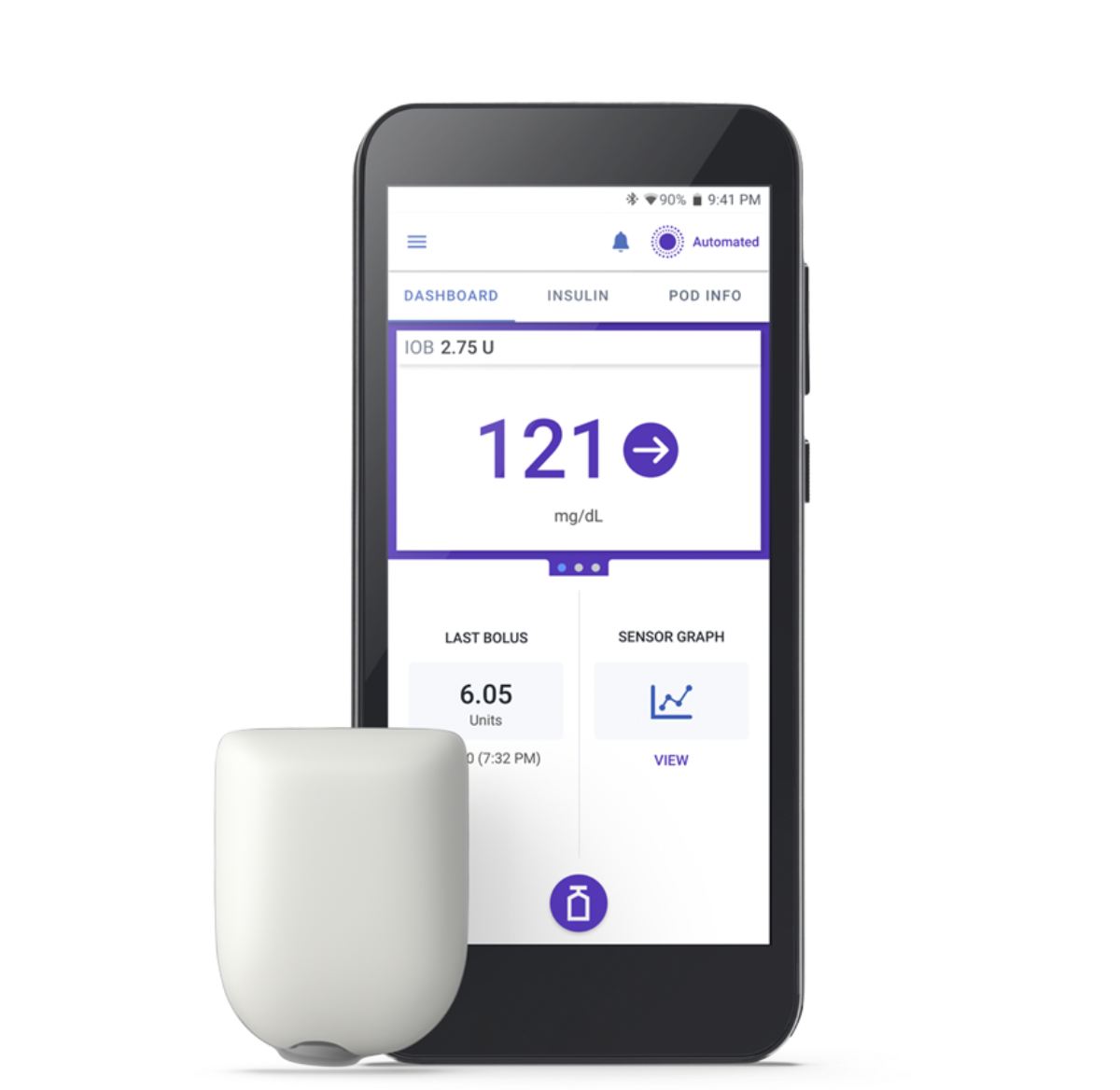
With my success with the Dexcom, the compatibility of the OmniPod with my Dexcom, the smallish profile of the device, and the lack of tubing, I finally decided to take a shot at using an insulin pump.
What a game changer.
Although learning how to apply the device requires a training session, once you have it down, application is relatively easy. The device is a bit larger than I expected, but it’s light and once you’re used to it it’s not too bad. The biggest adjustment has been sleeping on it without feeling like you’re pushing it. The insertion of the needle is quick and relatively painless. I flinch at times but it’s no worse than a normal insulin injection. The pods last about 3 days, so you’re replacing them often, but what it solves is permanent availability of insulin without needing pens or needles.
I haven’t missed a pre-meal insulin in the first three weeks of using this device. It uses AI and an initial dosage from my doctor, giving me a few units every hour as a maintenance dose, and then I can override as needed. I never have to interrupt myself to inject insulin. I control the device right from my iPhone, making eating meals out as easy as eating at home. The device effectively removes any reason to not be on top of my insulin levels every waking moment.
The results are astonishing. My average glucose level has gone down from ~140 to ~115. My in range Dexcom readings went from ~80% to ~98% in range; I went seven consecutive days at one point without a single Dexcom reading outside of my high or low range parameters.
My projected A1C has dropped from 6.9 to 6.1. That’s basically normal for a healthy human.
There are a few cons with this. I mentioned the device size, and sleeping adjustments, but I’ve made those. Changing every three days or so has been manageable. The one thing I don’t particularly like is having it on the same arm that my Dexcom is on; the bluetooth connections between my Dexcom and Omnipod aren’t strong enough to work unless they are within a few inches of each other. In addition, because the needle is a bit bigger than what the Dexcom uses, I am actively rotating positions, which means I’m alternating left and right arms as I change Dexcom sensors. The device is also big enough to be obvious in short sleeves, so I’ve taken to wearing long sleeves just to keep myself from being too self-conscious.
These “cons” are really minor inconveniences that don’t outweigh the major benefits of not having to carry insulin with me, not having to interrupt life to go take shots when I’m out or even when I’m home, and my ability to manage my insulin levels from my phone.
I suppose the moral of the story is don’t let your fear of failure interfere with success….but it could also be that everything is worth a try. In any case, I’m glad I was able to recognize when the parameters of trying a pump made sense to me personally, and I’m feeling very positive about my future as a diabetic.
Be welcome and true.