Archive
Medical Technology Update – The OmniPod 5
One of the more interesting psychological challenges I’ve had during my time as a diabetic has been an underlying belief that any change in treatment was to be considered a failure. When you are actively managing an illness in the way diabetes requires, your vigilance, resilience, and willpower are constantly at risk. For quite a while now I’ve resisted the idea of using an insulin pump rather than giving myself 4 to 5 injections a day; it felt like all of the effort I’d put in the last several years to get myself basically “normal” blood sugar wise just hadn’t been enough, and that I’d still failed.
This was especially true early in my battle, before 2018, when I found a new doctor and was first exposed to continuous glucose monitoring systems such as the Dexcom I still wear to this day. I’ve spoken about this in two earlier blog posts, one from that period in 2018 and one earlier this year that updated my technology usage and its success. Before that, cycling through doctors and medications and periods of simply bad health had left me feeling as though I was in a losing battle.
That feeling can be hard to shake even when one succeeds for a sustained period of time.
For the past few years my doctor, who is incredible, has asked about possibly using an insulin pump. There are several benefits, including no longer needing to carry insulin pens when out and about. I had always resisted because of the seeming permanence of a device, as well as the psychological acknowledgement that we’ve crossed another line in our defense, potentially the last line. One step closer to failure. In addition, most modern insulin pumps require tubes, and that just felt…overreaching.
Two months ago at my quarterly check in, my doctor again asked about using a pump, and mentioned there was a new kind of pump that was compatible with my Dexcom and did not use tubing. The OmniPod 5, while relatively new, was constructed for people with both Type I and Type II Diabetes.
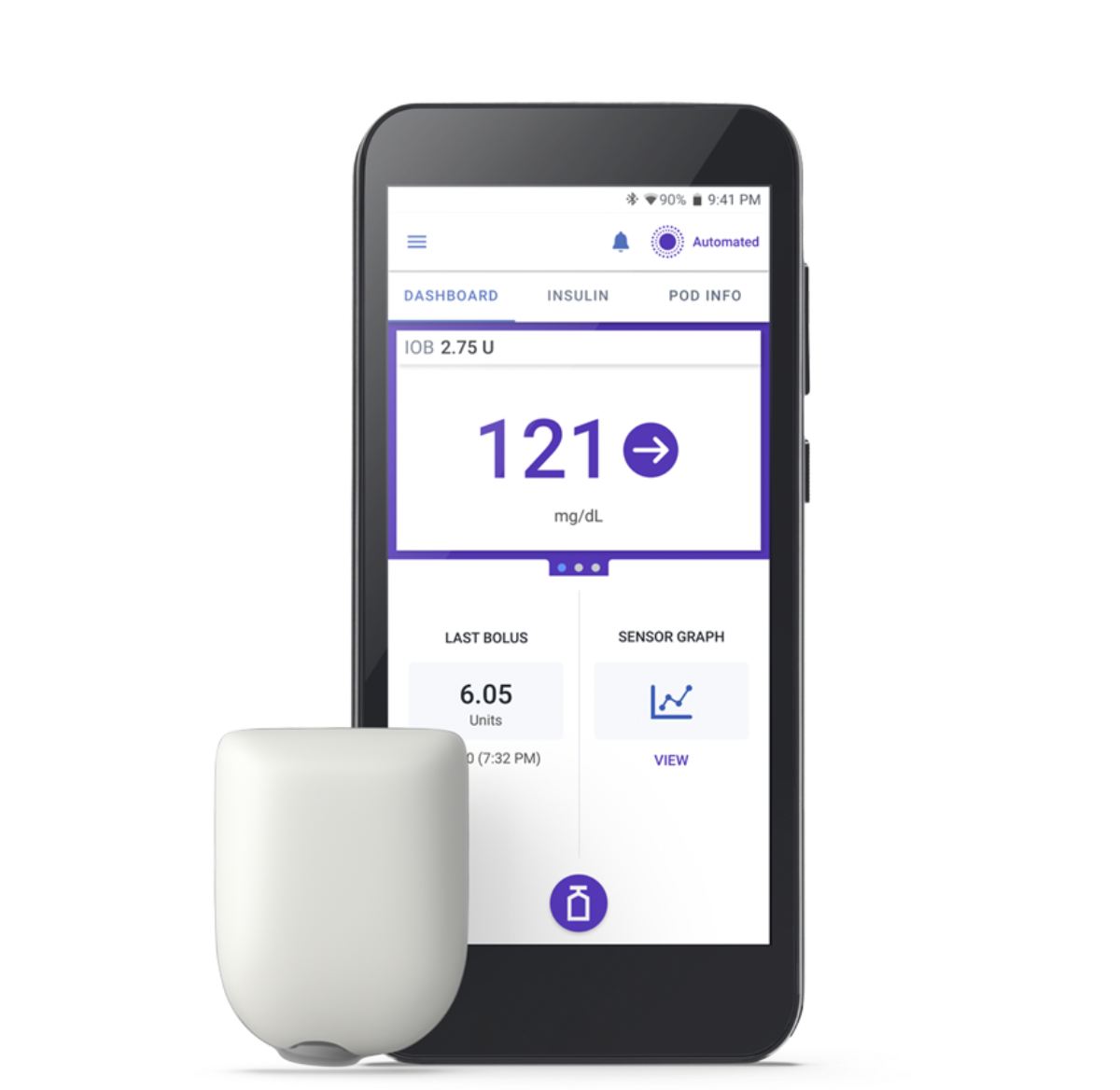
With my success with the Dexcom, the compatibility of the OmniPod with my Dexcom, the smallish profile of the device, and the lack of tubing, I finally decided to take a shot at using an insulin pump.
What a game changer.
Although learning how to apply the device requires a training session, once you have it down, application is relatively easy. The device is a bit larger than I expected, but it’s light and once you’re used to it it’s not too bad. The biggest adjustment has been sleeping on it without feeling like you’re pushing it. The insertion of the needle is quick and relatively painless. I flinch at times but it’s no worse than a normal insulin injection. The pods last about 3 days, so you’re replacing them often, but what it solves is permanent availability of insulin without needing pens or needles.
I haven’t missed a pre-meal insulin in the first three weeks of using this device. It uses AI and an initial dosage from my doctor, giving me a few units every hour as a maintenance dose, and then I can override as needed. I never have to interrupt myself to inject insulin. I control the device right from my iPhone, making eating meals out as easy as eating at home. The device effectively removes any reason to not be on top of my insulin levels every waking moment.
The results are astonishing. My average glucose level has gone down from ~140 to ~115. My in range Dexcom readings went from ~80% to ~98% in range; I went seven consecutive days at one point without a single Dexcom reading outside of my high or low range parameters.
My projected A1C has dropped from 6.9 to 6.1. That’s basically normal for a healthy human.
There are a few cons with this. I mentioned the device size, and sleeping adjustments, but I’ve made those. Changing every three days or so has been manageable. The one thing I don’t particularly like is having it on the same arm that my Dexcom is on; the bluetooth connections between my Dexcom and Omnipod aren’t strong enough to work unless they are within a few inches of each other. In addition, because the needle is a bit bigger than what the Dexcom uses, I am actively rotating positions, which means I’m alternating left and right arms as I change Dexcom sensors. The device is also big enough to be obvious in short sleeves, so I’ve taken to wearing long sleeves just to keep myself from being too self-conscious.
These “cons” are really minor inconveniences that don’t outweigh the major benefits of not having to carry insulin with me, not having to interrupt life to go take shots when I’m out or even when I’m home, and my ability to manage my insulin levels from my phone.
I suppose the moral of the story is don’t let your fear of failure interfere with success….but it could also be that everything is worth a try. In any case, I’m glad I was able to recognize when the parameters of trying a pump made sense to me personally, and I’m feeling very positive about my future as a diabetic.
An Occasional Coding Exercise Leads To Puzzle Book Sales
There was a time back in my early Amazon career, when I was managing the Independent Publisher Portal, also known as Kindle Direct Publishing, that I wanted to end to end test the publishing process for print on demand. The challenge with doing so was that the publishing workflows were really good at recognizing duplicative content as part of its fraud detection. This made testing repeatedly close to impossible, because each test required a new, unique book.
I decided to pop open Visual Studio, fire up my rusty C# skill, leverage Microsoft Word’s XML based formatting, and write some code to automatically generate books. Because I wanted them to be legitimate, repeatable, and make it to the Amazon marketplace, I couldn’t just randomly generate text files.
So I wrote a program that automatically generated Sudoku puzzles. First, I wrote a randomizer that would generate a random 9×9 sudoku grid filled with a solved and valid result. Then I wrote a sudoku solver to validate that the puzzle in its final form had a solution.
I then decided I wanted to have three different levels of solvable sudokus, with about 30 of each in a book. So, for each level, I removed a certain number of random digits from the puzzle, one by one, until the solver determined that the puzzle was no longer solvable. I then stepped back to the last solvable version and marked that as a “hard” puzzle, added two more digits back for a “medium”, and then two more digits back for an “easy” puzzle.
With that code written, I went online and downloaded a free use sudoku puzzle image, and created a Word document template including the cover file. I saved that file so I could open it later, along with a few fields I could merge in, such as the volume number, as well as the colors for the cover so any books I created could be unique. With that, a few parameters could be passed in to my program, generate 60 puzzles, add them as pages to the Word document, and save out a new, unique puzzle book.
I was able to successfully test my publishing workflow. Ten of these puzzle books were published out to Amazon. They remain available for sale today, and I still occasionally sell one.

With that done, I decided to go back and write a different puzzle output, adding a dictionary integration and code that created word search puzzles. There are ten of those out at Amazon as well. It was a fun little project that took a bit of thinking to get through, and over the course of several years managed to pay for a couple of dinners.
Medical Technology Update
This week marks the 24th anniversary of my diagnosis as a Type II diabetic. The first 15 years were marked with difficulties maintaining my weight, diet, and a consistent blood sugar level. That all changed in 2018 when I switched doctors to an endocrinologist at Sansum Clinic in Santa Barbara. At the same time, the first iterations of continuous glucose monitors hit the commercial market.
Both events changed my entire outlook on how I managed my disease. I wrote about the impact of the first Dexcom device on my health in a post in 2018. At the same time, my doctor was really what I needed at the time. My very first diabetes doctor was a wonderful lady from Europe, but once I moved to the Central Coast, I struggled to find a doctor who had the right approaches to handle my condition. Switching to my endocrinologist was a literal lifesaver, as he worked with me to find treatments that worked rather than simply talked at me about what I should be doing.
And over the last eight years, the medical technology has continued to advance, leading to an unprecedented string of success in my management of my disease. One would think that over time success would slowly degrade, but the last two years I’ve managed to hit my best numbers yet, and maintain them.
For those of you who aren’t aware, the way diabetes is measured is by measuring the average volume of glucose in the blood stream over the trailing 3 month period. This measurement, the HbA1c (Hemoglobin A1c), is tested routinely every appointment. The HbA1c’s normal range is between 5.5 and 6.5, with anything over 7 considered to be diabetic. My target number in my head is 7 or lower. For historical context, when I began using a Dexcom, my HbA1c was a staggering 12.
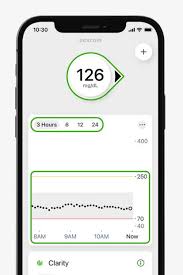
This measurement is different than what the Dexcom measures, which is a point in time measurement of glucose volume in the blood stream. That normal range is between 80 and 120, and is the numeric value that appears on Dexcom’s monitoring app. For historical context, when I was diagnosed I was at an unfathomable 549.
As I mentioned in my previous post, which is worth a read, one of the things constant feedback allows is for the patient to have full visibility into how their blood is reacting at any point in time; I’ll admit at this point I understand way more about my blood chemistry than I ever wanted to learn. But the constant feedback allows for targeted action with insulin and diet.
The current device, the Dexcom G7, has come leaps and bounds in terms of reliability and accuracy. The device used to take hours to “warm up”; now readings after sensor application are available in about 20 minutes. The device used to be on the abdomen and could awkwardly catch on things, but now I wear it on the back of my upper arm. The applicator is easier to use, with a simple push button mechanism. And the technology on the phone has advanced to the point where it can extrapolate what my HbA1c will be based on its trailing 3 month data.
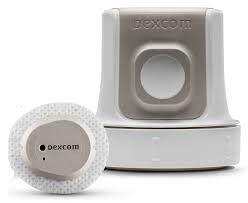
What this has meant for me is, I no longer fixate on what’s happening right this moment. I react to the changes in my blood chemistry as best I can, but I can also let things go from time to time, such as around the holidays. And this is because my target now is an average glucose level of around 130-140, which according to the application, loosely translates to a 7 on the HbA1c scale. That’s led to less worrying and less stress, allowing me to essentially push and pull on my readings as life happens.
This has been helped by updates to my medications, which are extensive. The biggest impact has been Mounjaro, which is a once a week injection that targets the blood sugar while also having the side effect of appetite suppression. Medications like Mounjaro, Ozempic, and Trulicity have been used for weight loss and have been advertised extensively in that manner, but their impact on diabetes can’t be overstated. I’ve dropped about 20 pounds and maintained that weight loss alongside the technology improvements that manage my life.
As a result, my HbA1c been under 7, and at times as low as 6.5, for two years running now. And to be fair, with less emotional burden or mental stress. Even at times like now, where the holidays have just wrapped up and I’ve had to deal with issues surrounding my job, I still managed to land a 6.8 for my trailing three month HbA1c score. I don’t fist pump often, but when I do, that’s the kind of thing that makes it happen.
And the improvements continue. Dexcom is coming out with a 15 day device (the current one lasts 10 days), which will reduce cost and make it that much simpler to use.
It hasn’t been easy managing my illness, but with all this assistance from my amazing doctor, medications, and technology, the last 2 years out of the last 24 have been the best so far.
Be welcome and true.