Archive
An Occasional Coding Exercise Leads To Puzzle Book Sales
There was a time back in my early Amazon career, when I was managing the Independent Publisher Portal, also known as Kindle Direct Publishing, that I wanted to end to end test the publishing process for print on demand. The challenge with doing so was that the publishing workflows were really good at recognizing duplicative content as part of its fraud detection. This made testing repeatedly close to impossible, because each test required a new, unique book.
I decided to pop open Visual Studio, fire up my rusty C# skill, leverage Microsoft Word’s XML based formatting, and write some code to automatically generate books. Because I wanted them to be legitimate, repeatable, and make it to the Amazon marketplace, I couldn’t just randomly generate text files.
So I wrote a program that automatically generated Sudoku puzzles. First, I wrote a randomizer that would generate a random 9×9 sudoku grid filled with a solved and valid result. Then I wrote a sudoku solver to validate that the puzzle in its final form had a solution.
I then decided I wanted to have three different levels of solvable sudokus, with about 30 of each in a book. So, for each level, I removed a certain number of random digits from the puzzle, one by one, until the solver determined that the puzzle was no longer solvable. I then stepped back to the last solvable version and marked that as a “hard” puzzle, added two more digits back for a “medium”, and then two more digits back for an “easy” puzzle.
With that code written, I went online and downloaded a free use sudoku puzzle image, and created a Word document template including the cover file. I saved that file so I could open it later, along with a few fields I could merge in, such as the volume number, as well as the colors for the cover so any books I created could be unique. With that, a few parameters could be passed in to my program, generate 60 puzzles, add them as pages to the Word document, and save out a new, unique puzzle book.
I was able to successfully test my publishing workflow. Ten of these puzzle books were published out to Amazon. They remain available for sale today, and I still occasionally sell one.

With that done, I decided to go back and write a different puzzle output, adding a dictionary integration and code that created word search puzzles. There are ten of those out at Amazon as well. It was a fun little project that took a bit of thinking to get through, and over the course of several years managed to pay for a couple of dinners.
Medical Technology Update
This week marks the 24th anniversary of my diagnosis as a Type II diabetic. The first 15 years were marked with difficulties maintaining my weight, diet, and a consistent blood sugar level. That all changed in 2018 when I switched doctors to an endocrinologist at Sansum Clinic in Santa Barbara. At the same time, the first iterations of continuous glucose monitors hit the commercial market.
Both events changed my entire outlook on how I managed my disease. I wrote about the impact of the first Dexcom device on my health in a post in 2018. At the same time, my doctor was really what I needed at the time. My very first diabetes doctor was a wonderful lady from Europe, but once I moved to the Central Coast, I struggled to find a doctor who had the right approaches to handle my condition. Switching to my endocrinologist was a literal lifesaver, as he worked with me to find treatments that worked rather than simply talked at me about what I should be doing.
And over the last eight years, the medical technology has continued to advance, leading to an unprecedented string of success in my management of my disease. One would think that over time success would slowly degrade, but the last two years I’ve managed to hit my best numbers yet, and maintain them.
For those of you who aren’t aware, the way diabetes is measured is by measuring the average volume of glucose in the blood stream over the trailing 3 month period. This measurement, the HbA1c (Hemoglobin A1c), is tested routinely every appointment. The HbA1c’s normal range is between 5.5 and 6.5, with anything over 7 considered to be diabetic. My target number in my head is 7 or lower. For historical context, when I began using a Dexcom, my HbA1c was a staggering 12.
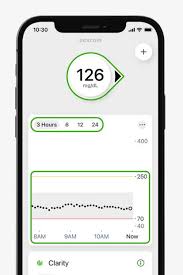
This measurement is different than what the Dexcom measures, which is a point in time measurement of glucose volume in the blood stream. That normal range is between 80 and 120, and is the numeric value that appears on Dexcom’s monitoring app. For historical context, when I was diagnosed I was at an unfathomable 549.
As I mentioned in my previous post, which is worth a read, one of the things constant feedback allows is for the patient to have full visibility into how their blood is reacting at any point in time; I’ll admit at this point I understand way more about my blood chemistry than I ever wanted to learn. But the constant feedback allows for targeted action with insulin and diet.
The current device, the Dexcom G7, has come leaps and bounds in terms of reliability and accuracy. The device used to take hours to “warm up”; now readings after sensor application are available in about 20 minutes. The device used to be on the abdomen and could awkwardly catch on things, but now I wear it on the back of my upper arm. The applicator is easier to use, with a simple push button mechanism. And the technology on the phone has advanced to the point where it can extrapolate what my HbA1c will be based on its trailing 3 month data.
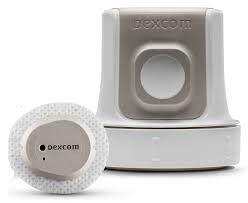
What this has meant for me is, I no longer fixate on what’s happening right this moment. I react to the changes in my blood chemistry as best I can, but I can also let things go from time to time, such as around the holidays. And this is because my target now is an average glucose level of around 130-140, which according to the application, loosely translates to a 7 on the HbA1c scale. That’s led to less worrying and less stress, allowing me to essentially push and pull on my readings as life happens.
This has been helped by updates to my medications, which are extensive. The biggest impact has been Mounjaro, which is a once a week injection that targets the blood sugar while also having the side effect of appetite suppression. Medications like Mounjaro, Ozempic, and Trulicity have been used for weight loss and have been advertised extensively in that manner, but their impact on diabetes can’t be overstated. I’ve dropped about 20 pounds and maintained that weight loss alongside the technology improvements that manage my life.
As a result, my HbA1c been under 7, and at times as low as 6.5, for two years running now. And to be fair, with less emotional burden or mental stress. Even at times like now, where the holidays have just wrapped up and I’ve had to deal with issues surrounding my job, I still managed to land a 6.8 for my trailing three month HbA1c score. I don’t fist pump often, but when I do, that’s the kind of thing that makes it happen.
And the improvements continue. Dexcom is coming out with a 15 day device (the current one lasts 10 days), which will reduce cost and make it that much simpler to use.
It hasn’t been easy managing my illness, but with all this assistance from my amazing doctor, medications, and technology, the last 2 years out of the last 24 have been the best so far.
The Importance Of Mentorship
Mentorship has been a key part my ability to influence beyond my team, in particular during my time at Amazon. I spent a lot of my time at Amazon giving back, either through coaching peers in document writing, helping to train inbound engineering managers, or helping new Amazonians navigate getting things done. I’ve developed a perspective about mentorship, both from being a mentor, as well as finding a mentor. When I was an engineer, I always found time to help others, including spending lunch breaks helping a QA engineer learn how to automate testing. I think there’s always value in learning as well as teaching.
Finding a Mentor
I have a distinct perspective on the timing of finding a mentor, and what I seek to gain from the relationship. For a person to gain value from having a mentor, that person needs to have some level of clarity around what they are looking to learn. Finding a mentor without having some purpose for the relationship, in my opinion, is non-productive and will ultimately not succeed if a purpose is not defined. In addition to that clarity, the mentee needs to own the topics, the conversations, and the choice to continue or not. It’s important to choose the right mentor for the topics at hand, and without that clarity, choosing a mentor can be difficult, and runs the risk of finding a less than suitable collaborator.
I’ve sought mentors a few times in my career. At each point, I had very specific things I wanted to work on. To my point above, it didn’t make much sense for me to sit in a conversation with a mentor without some idea of what I wanted to accomplish. Early in my time at Amazon, I felt that I needed to improve some of my leadership skills as my teams grew larger in size. When I decided I needed someone to talk to about this, I could have sought out another engineering manager, but that wasn’t what I was really after. I didn’t necessarily want to talk to someone in the same role I was.
Instead, I sought out a leader one level up from me who had experience managing associates in Amazon fulfillment centers. I was very specific about the types of issues I wanted to talk through, and felt that the team scale this person had experienced would have a better perspective than someone in a similar role as myself. I spent close to 5 months working with this mentor until I felt like I had absorbed and internalized what they could teach me. At the end of that time period I moved on.
And that’s another important point. Mentors are not forever. They can be, but they don’t have to be, and mentors won’t take it personally if a mentee decides it’s time to move on. I’ve encountered people who don’t want to commit to a mentor because they feel it’s a one-way door. That’s not typically how it works; either of those involved can choose to stop, and it won’t be taken personally.
And if I don’t have anything specific I am working on, I am fine not having a mentor for a while.
Being A Mentor
I played golf in on my high school golf team and quite often in my early 20s. I wasn’t bad; I could shoot low 90s consistently if I played often and putted well. I was able to play well enough that playing was more fun than frustrating. One summer, though, a friend of mine wanted to learn how to play but was having trouble making consistent contact. Over a couple of weeks, I took his swing apart and helped him put it back together, getting his weight back in his stance, making sure his head was still, and keeping his right elbow tucked in.
I shot in the high 80s the rest of that summer and into the next year. By teaching him how to get his swing together, I inadvertently fixed a few flaws in mine and my game improved dramatically.
And that’s one of the hidden powers of mentorship. You learn so much yourself by teaching someone else.
I once managed an engineer trying to get promoted to the next level. They were on a team surrounded by more senior engineers, and had reached a point where they were starting to level off, despite being a very effective front end engineer while steadily improving on back end work. At around this time, I inherited a team that was entirely back end engineers, facing a project with a lot of front end work. I moved my aspiring engineer to the back end team, and instructed them that they were now the subject matter expert, and their job was to teach this back end team how to become effective, if not excellent, front end engineers. That engineer thrived being put in a position to advise more senior engineers on unfamiliar technology, helped to deliver a complex project, and secured their promotion later that year.
Often people are concerned that they are not skilled enough to be a mentor, or don’t know enough to give advice. But in deciding not to be a mentor, they actually miss opportunities to learn so much themselves, and miss opportunities to improve a lot of non technical skills like communication and listening.
Anyone can be a mentor. All you need is a perspective, a willingness to listen, and a willingness to share.
Final Thoughts
Don’t discount the benefits of being a mentor in whatever capacity you can be. It’s a great way to learn, to teach, and to have an impact beyond just what you yourself produce. It’s a great first step to becoming a force multiplier, someone who makes the team around them better.
From there, you can take steps like I did, where I took on several different Bar Raiser roles at Amazon, and look for ways to generate impact well beyond your normal day to day.
And whenever you feel like you want to improve something, take the step and find the right mentor to help you with that particular challenge. It’s worth the effort.
Be welcome and true.

 Rob Hope