Archive
A Prompt Response
Today’s Prompt
What is your middle name? Does it hold any special significance?
My middle name is David.
I’m named after the oldest brothers of my parents, Robert Dearth on my mother’s side, and David Hope on my father’s side. I’m not a particularly sentimental person, so while those names have meaning to my parents, I’ve never reflected on that fact too much.
That said, there was a significant time period where I considered going by my middle name. My name has been a source of consternation for much of my life. There were many times in my childhood where we relocated, changing schools and homes, and any one of those presented an opportunity to make a change. Such things were not as prevalent or encouraged as they might be today, so I stuck it out.
I don’t like the nickname Bob. For those of you who don’t know who Bob Hope is, you might not find this relatable. But the sheer amount of Bob Hope jokes that plagued my youth still haunt me to this day. Jokes about USO tours and Brooke Shields and on and on and on. My wife can relate to a degree; her family name is Scully and Vin Scully provided similar, well, amusement I suppose. And I guess because of the famous name, shaking the nickname Bob was difficult.
I don’t particularly care for Robbie, or at least I didn’t once I hit my teen years. My uncle, one of the most important people in my life, settled for calling me Robe (short for Bathrobe) for some reason; I made the mistake of admitting that during a team event at work and that stuck for a bit. I’ve pretty much chosen Rob as my nickname since high school.
Generally I’m fine with Robert, there are many people I know who call me that.
People ignored my wishes, in fact often they still make the mistake of calling me Bob to this day. I remember a little league coach calling me out to my mother about how I ignored him when he called on me by the name Bob. She reminded him it wasn’t my name and suggested he make a change. Today I let it go, but I still do my best to make sure that my nickname is in use on things like my company’s directory and my LinkedIn profile.
At the end of the day, I don’t think of myself as a David or a Dave…so I’m glad I didn’t take that step.
This post is one of many in my responses to random prompts surfaced by the application that tracks my website statistics, as well as any others I encounter.
Medical Technology Update
This week marks the 24th anniversary of my diagnosis as a Type II diabetic. The first 15 years were marked with difficulties maintaining my weight, diet, and a consistent blood sugar level. That all changed in 2018 when I switched doctors to an endocrinologist at Sansum Clinic in Santa Barbara. At the same time, the first iterations of continuous glucose monitors hit the commercial market.
Both events changed my entire outlook on how I managed my disease. I wrote about the impact of the first Dexcom device on my health in a post in 2018. At the same time, my doctor was really what I needed at the time. My very first diabetes doctor was a wonderful lady from Europe, but once I moved to the Central Coast, I struggled to find a doctor who had the right approaches to handle my condition. Switching to my endocrinologist was a literal lifesaver, as he worked with me to find treatments that worked rather than simply talked at me about what I should be doing.
And over the last eight years, the medical technology has continued to advance, leading to an unprecedented string of success in my management of my disease. One would think that over time success would slowly degrade, but the last two years I’ve managed to hit my best numbers yet, and maintain them.
For those of you who aren’t aware, the way diabetes is measured is by measuring the average volume of glucose in the blood stream over the trailing 3 month period. This measurement, the HbA1c (Hemoglobin A1c), is tested routinely every appointment. The HbA1c’s normal range is between 5.5 and 6.5, with anything over 7 considered to be diabetic. My target number in my head is 7 or lower. For historical context, when I began using a Dexcom, my HbA1c was a staggering 12.
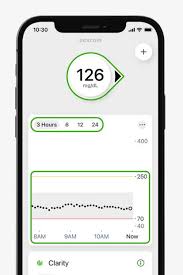
This measurement is different than what the Dexcom measures, which is a point in time measurement of glucose volume in the blood stream. That normal range is between 80 and 120, and is the numeric value that appears on Dexcom’s monitoring app. For historical context, when I was diagnosed I was at an unfathomable 549.
As I mentioned in my previous post, which is worth a read, one of the things constant feedback allows is for the patient to have full visibility into how their blood is reacting at any point in time; I’ll admit at this point I understand way more about my blood chemistry than I ever wanted to learn. But the constant feedback allows for targeted action with insulin and diet.
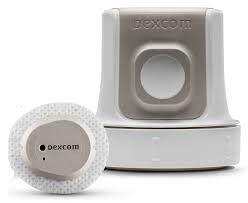
The current device, the Dexcom G7, has come leaps and bounds in terms of reliability and accuracy. The device used to take hours to “warm up”; now readings after sensor application are available in about 20 minutes. The device used to be on the abdomen and could awkwardly catch on things, but now I wear it on the back of my upper arm. The applicator is easier to use, with a simple push button mechanism. And the technology on the phone has advanced to the point where it can extrapolate what my HbA1c will be based on its trailing 3 month data.
What this has meant for me is, I no longer fixate on what’s happening right this moment. I react to the changes in my blood chemistry as best I can, but I can also let things go from time to time, such as around the holidays. And this is because my target now is an average glucose level of around 130-140, which according to the application, loosely translates to a 7 on the HbA1c scale. That’s led to less worrying and less stress, allowing me to essentially push and pull on my readings as life happens.
This has been helped by updates to my medications, which are extensive. The biggest impact has been Mounjaro, which is a once a week injection that targets the blood sugar while also having the side effect of appetite suppression. Medications like Mounjaro, Ozempic, and Trulicity have been used for weight loss and have been advertised extensively in that manner, but their impact on diabetes can’t be overstated. I’ve dropped about 20 pounds and maintained that weight loss alongside the technology improvements that manage my life.
As a result, my HbA1c been under 7, and at times as low as 6.5, for two years running now. And to be fair, with less emotional burden or mental stress. Even at times like now, where the holidays have just wrapped up and I’ve had to deal with issues surrounding my job, I still managed to land a 6.8 for my trailing three month HbA1c score. I don’t fist pump often, but when I do, that’s the kind of thing that makes it happen.
And the improvements continue. Dexcom is coming out with a 15 day device (the current one lasts 10 days), which will reduce cost and make it that much simpler to use.
It hasn’t been easy managing my illness, but with all this assistance from my amazing doctor, medications, and technology, the last 2 years out of the last 24 have been the best so far.
My Cover Letter Approach
As I’ve been involved in my search for a new role, I’ve taken several different approaches to cover letters. I’m going to outline what I am currently doing and my rationale for doing so.
One of the challenges of preparing resumes or cover letters has been the depth and breadth of my experience. I spent time as a long term engineer, as an engineering manager with a high percentage of hands on coding expected, and as an engineering manager not expected to code but to be firmly involved in technical processes and decision making. That can make things like “tailored” details on resumes difficult. I felt that it was difficult to adequately state what I perceive my value to be.
I wanted to arrive at a repeatable, scalable process that would take just a few minutes for each job posting. I wanted the documents I prepared to adequately represent my career and qualifications. I needed speed and ease as I, like many of my colleagues, cycled through hundreds of applications.
As of this writing, it’s up for debate if my approach will ultimately be successful. I do think it has managed to get the attention of quite a few companies that might not have otherwise noticed. Responses to those applications seem to be better. During several interview cycles my cover letter was referred to as a resource for the conversation.
There were several general sentiments I heard when this journey began. There was a predominant feeling that cover letters are never read. It was suggested that even though they weren’t read, they couldn’t necessarily hurt. They could be viewed as a tiebreaker should recruiters or hiring managers be choosing between strong candidates in this highly competitive market.
After a couple of weeks of choosing to ignore cover letters, since the prevailing wisdom is they were ignored, I actually decided to completely change direction. If cover letters are never read, except in rare instances, I could do what I want with them.
I chose to use my cover letter to surface all of the information I couldn’t fit on the resume I was including with my application.
I recognize this flies in the face of conventional wisdom, but, hey, if no one’s going to read it….
¯\_(ツ)_/¯
Thus, I went from no cover letter to a 9 pager that includes:
- Page One: A targeted cover letter, with mostly templated information, summarizing my career highlights and the value I bring. It contains a paragraph introducing me; a paragraph on my general philosophy; a paragraph on what I’ve done as a manager; and a paragraph on what I’ve accomplished as an engineer. Within two or three minutes, I can adjust content, add specific information, and optimize for the position I am interested in. A variation of that cover letter can be found here.
- Page Two: A portfolio of the websites, systems, and companies that I have had an impact on. Many times candidates are asked for this portfolio, and I automatically include it in my cover letter, just in case someone opens it and decides to scroll past the first page. That portfolio can be found here.
- Pages Three through Nine: A list of the critical projects I’ve delivered, and my role in delivering them, along with the results. I’ve missed a few here and there and update this list as I recall things. For example, in a recent interview I talked about a feature I built into one of my web portals that would include the entire logging history of the system into the web page, piggybacking and enhancing Microsoft .NET’s native tracing feature. I’m going to add that to the list soon.
Having the list ready to go gives me a couple of other efficiencies.
First, if a company doesn’t ask for a cover letter, and I really want to send one, I’ll simply include it as the first page of my resume by copying page one from here and adjusting it for those needs.
Second, I have my list of projects ready to go, already in consistent format with my resume. I then pick and choose the relevant projects from this list to include on the resume I will send based on the company’s requirements.
So, while I am tailoring my resume, I’m not rewriting narratives or reorganizing. I can be ready to apply to any position within 5-10 minutes with a consistent, complete narrative.
If you are also searching for a new role, I wish you good luck.
Be welcome and true.

 Rob Hope