Medical Technology Update
This week marks the 24th anniversary of my diagnosis as a Type II diabetic. The first 15 years were marked with difficulties maintaining my weight, diet, and a consistent blood sugar level. That all changed in 2018 when I switched doctors to an endocrinologist at Sansum Clinic in Santa Barbara. At the same time, the first iterations of continuous glucose monitors hit the commercial market.
Both events changed my entire outlook on how I managed my disease. I wrote about the impact of the first Dexcom device on my health in a post in 2018. At the same time, my doctor was really what I needed at the time. My very first diabetes doctor was a wonderful lady from Europe, but once I moved to the Central Coast, I struggled to find a doctor who had the right approaches to handle my condition. Switching to my endocrinologist was a literal lifesaver, as he worked with me to find treatments that worked rather than simply talked at me about what I should be doing.
And over the last eight years, the medical technology has continued to advance, leading to an unprecedented string of success in my management of my disease. One would think that over time success would slowly degrade, but the last two years I’ve managed to hit my best numbers yet, and maintain them.
For those of you who aren’t aware, the way diabetes is measured is by measuring the average volume of glucose in the blood stream over the trailing 3 month period. This measurement, the HbA1c (Hemoglobin A1c), is tested routinely every appointment. The HbA1c’s normal range is between 5.5 and 6.5, with anything over 7 considered to be diabetic. My target number in my head is 7 or lower. For historical context, when I began using a Dexcom, my HbA1c was a staggering 12.
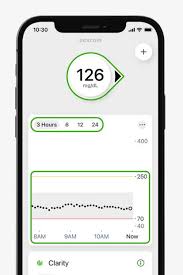
This measurement is different than what the Dexcom measures, which is a point in time measurement of glucose volume in the blood stream. That normal range is between 80 and 120, and is the numeric value that appears on Dexcom’s monitoring app. For historical context, when I was diagnosed I was at an unfathomable 549.
As I mentioned in my previous post, which is worth a read, one of the things constant feedback allows is for the patient to have full visibility into how their blood is reacting at any point in time; I’ll admit at this point I understand way more about my blood chemistry than I ever wanted to learn. But the constant feedback allows for targeted action with insulin and diet.
The current device, the Dexcom G7, has come leaps and bounds in terms of reliability and accuracy. The device used to take hours to “warm up”; now readings after sensor application are available in about 20 minutes. The device used to be on the abdomen and could awkwardly catch on things, but now I wear it on the back of my upper arm. The applicator is easier to use, with a simple push button mechanism. And the technology on the phone has advanced to the point where it can extrapolate what my HbA1c will be based on its trailing 3 month data.
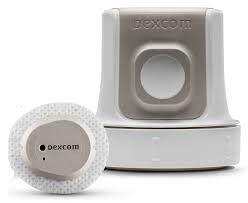
What this has meant for me is, I no longer fixate on what’s happening right this moment. I react to the changes in my blood chemistry as best I can, but I can also let things go from time to time, such as around the holidays. And this is because my target now is an average glucose level of around 130-140, which according to the application, loosely translates to a 7 on the HbA1c scale. That’s led to less worrying and less stress, allowing me to essentially push and pull on my readings as life happens.
This has been helped by updates to my medications, which are extensive. The biggest impact has been Mounjaro, which is a once a week injection that targets the blood sugar while also having the side effect of appetite suppression. Medications like Mounjaro, Ozempic, and Trulicity have been used for weight loss and have been advertised extensively in that manner, but their impact on diabetes can’t be overstated. I’ve dropped about 20 pounds and maintained that weight loss alongside the technology improvements that manage my life.
As a result, my HbA1c been under 7, and at times as low as 6.5, for two years running now. And to be fair, with less emotional burden or mental stress. Even at times like now, where the holidays have just wrapped up and I’ve had to deal with issues surrounding my job, I still managed to land a 6.8 for my trailing three month HbA1c score. I don’t fist pump often, but when I do, that’s the kind of thing that makes it happen.
And the improvements continue. Dexcom is coming out with a 15 day device (the current one lasts 10 days), which will reduce cost and make it that much simpler to use.
It hasn’t been easy managing my illness, but with all this assistance from my amazing doctor, medications, and technology, the last 2 years out of the last 24 have been the best so far.
Be welcome and true.

 Rob Hope