About Romance Under Review
Released: May 2020
Introduction
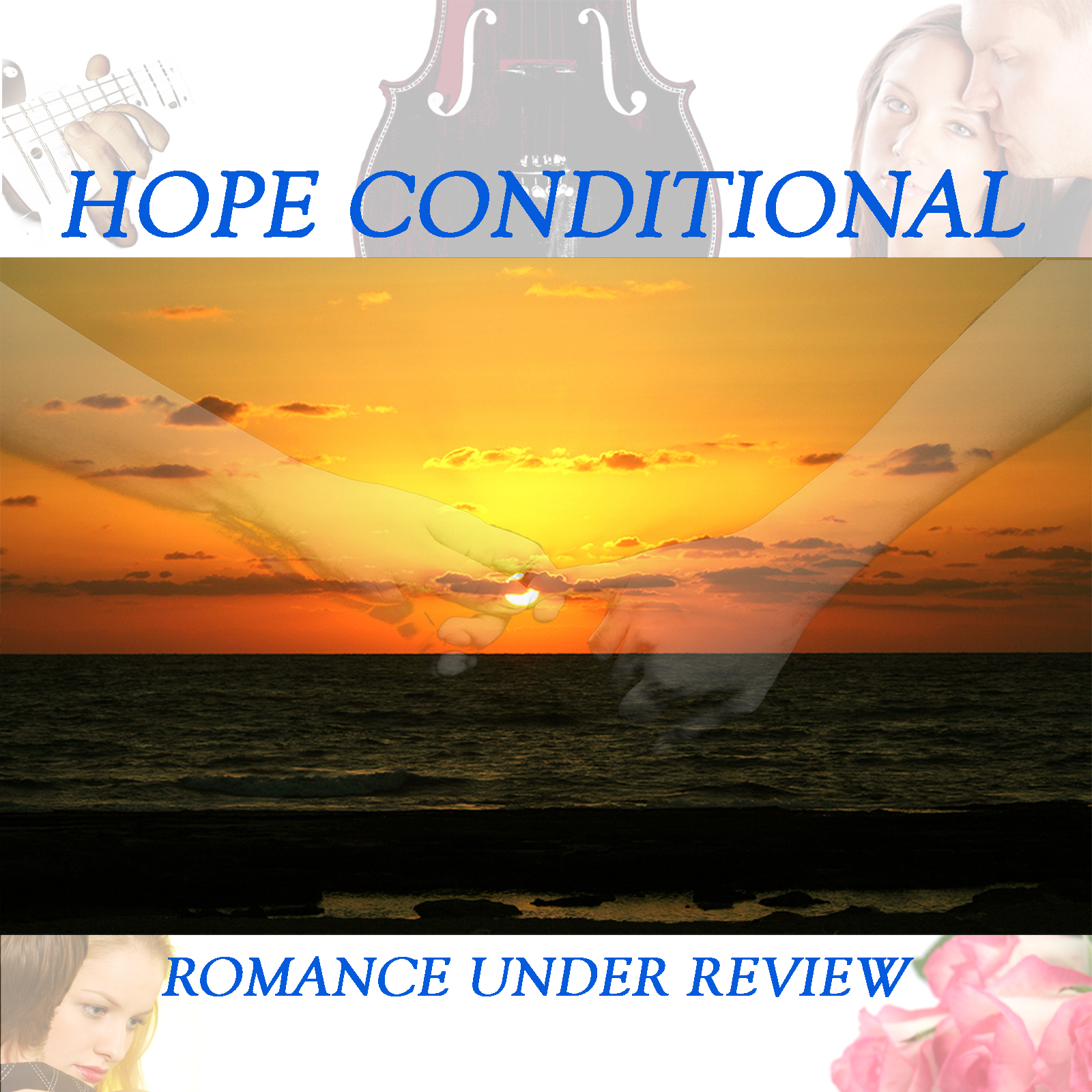
This was my first attempt to record an actual album. I imagined a storyline where a man meets someone, and then eventually it doesn’t work out for various reasons. From the opening, where the main character decides to try the dating world, through an introduction, a first date, a second date at a dance club, and the feelings in between as the fledgling relationship collapses, builds a story.
Much of the music in this release comes from songs I had written before, but I’m not a singer, so I changed them into instrumentals. Many of the lyrics can be found in my book of poetry, Descent: A Look Inside, and I tried to link the lyrical content to the theme in the story. In my opinion, because of this, the album suffers from being structured like songs without singing. Later releases I approached from much more of a musical story-telling mindset with mostly newly composed material.
I was still learning my way around a DAW and digital recording media, and was still new to mixing and compression and equalization, so someday I’d love to remaster this. As time goes on, I become less satisfied with its mix.
Available on Spotify, Apple Music, YouTube, and Amazon Music.
Themes Explored
On later releases, I delved into a ton of musical themes. On this one, I stayed mostly in my comfort zone of guitar based rock music. I brought in many different various orchestral instruments as well, striving for a symphonic rock type of approach. I consider this album my first playground for trying to determine what I was going to do with my music going forward.
Specific Techniques Explored
Each release, I try to challenge myself with some sort of technique. On this album, there are several instances of key changes (in all directions, at all intervals), tempo changes, rarely used modes (such as Locrian), and composite meter. The Dance is in Locrian mode; Charades features near constant meter changes from 7/4 to 6/4 to 4/4 and key changes after every chorus, up a minor third from the previous key. One of the things I really try to incorporate is the use of complex structures without distracting the listener. At times it works, at times it doesn’t, but that’s for the listener to know for sure.
Songs
Awakening
Key(s): Bm Time Signature(s): 4/4
The opening song, intended to introduce the album and set the stage for the energy to follow.
The track opens with a vocal chorus in Bm, eventually shifting to a dark tritone based chord shift, from Bm to F. At 0:17, the vocal chorus also introduces the one of the melodic themes of the album, which is reintroduced at 0:48 by the main instruments. The melody is featured in various places, including as the primary theme in The Game Begins, and is employed in the bridge of The Dance, as well as in other places.
The Game Begins
Key(s): Em (intro, chorus), Am (verse), F#m (solo) Time Signature(s): 4/4
The main character gathers the courage to enter the game.
The song is a straight-ahead late 80s metal instrumental, showcasing some of my main influences such as George Lynch, RATT, and Queensryche. The main riff opens and closes the narrative of the album, as it is featured again in the final track. The song changes keys several times, transition from Em in the intro and chorus to Am for the verses, and then dropping to F#m for the solo portion.
In Dreams
Key(s): Am Time Signature(s): 4/4
The main character dares to dream about what might be. The song is intended to be somewhat lively, but is still in a minor key, as the main character does not yet trust dreams.
This is one of the first instrumentals I wrote, featuring a chord progression in Am, starting with an Am7add9, followed by a G, over an open A string. Chords over open strings or “droning tone” is a technique I use quite a bit. It also utilizes several sus2 chords throughout the bridge, resolving each in turn as the progression continues.
He Sees Her
Key(s): A Phrygian (aka Dm), Bm (solo), B Phrygian (aka Em) Time Signature(s): 4/4
The main character is introduced to the one, and builds up the courage to ask for a date.
This is one of the songs I wrote specifically for this release and was not something I repurposed from previous writings. It includes several interesting changes, such as the use of a #4 in the Bb major chord at the end of the verse, which moves F to the Bb in the bass. It’s in Phrygian mode, but doesn’t sound too much off the normal minor tonality until it hits that part of the progression. It’s one of the things I’ve come up with that I’ve really liked from this album and I’ve used similar patterns in later songs.
Over Lunch
Key(s): A, B (second half of solo) Time Signature(s): 4/4
They share a quiet lunch, and the song is intended to be the background for that mostly positive experience.
In later releases, I started to think of my albums as soundtracks to a degree; that idea started with this piece. I imagined a couple on their first date, having a nice lunch somewhere, and that this would be the music playing in the background if this was a movie. The use of a major key with many 7th chords gives it a much more upbeat tone in spite of its laconic pacing, a move of the major 4 chord up a minor third to the minor 6 major chord (D to F) adds some flavor to the bridge.
Apprehension
Key(s): Am, E Phrygian, D Dorian Time Signature(s): 4/4, 3/4, 7/4, 3/4 over 4/4 polyrhythm
This song invokes feelings of uncertainty and apprehension in the face of dating success.
Apprehension most represents my musical tastes on the album, drawing from such influences as Dokken, George Lynch, Rush, and Led Zeppelin. It moves through several key and time changes, including a section with a 3/4 chord signature over a 4/4 drum pattern, my first attempt at polyrhythm, which would later become a core technique I apply in my writing. It also liberally borrows a Lynch technique, using a flatted 5th in the power chords driving the song; in later releases I expand this to more mature chords using the flatted 5th in music beyond just metal-based riffs.
Warm Embrace
Key(s): A, F#, D Phrygian (bridge), G Phrygian (bridge) Time Signature(s): 4/4
When feelings of affection come with a touch of melancholy and a feeling one doesn’t deserve them.
In this song I employ borrowed chords in the verse, substituting a minor 4 chord for what should be a major 4 until the end of the verse, which closes by borrowing the major 6th and major 7th chord, allowing me to introduce several tritone intervals in the main melody. The bridge switches back and forth between D Phrygian and G Phrygian, to create a sense of foreboding.
The Dance
Key(s): E Locrian, Bbm (solo), Bb (end of solo) Time Signature(s): 4/4
Another seemingly successful date, this time at a dance club.
This song takes slight inspiration from parts of Lin-Manual Miranda’s In The Heights for setting and idea. This is another piece constructed specifically for this release, and as part of a challenge from Jake Lizzio over at Signals about the use of modes, I wanted to write something using the “least used mode”, Locrian; in this case, basing my tonal center on E in the key of F. I attempted some use of sadder instruments such as the trombone for the main melody to offset the upbeat bass with a different overall mood.
Fun fact: when I was done with this I sent it to Jake on a whim to ask him what he thought of my attempt to write in some a difficult tonality, and he offered some critique on the mix but enjoyed the track.
Is This Love
Key(s): D Time Signature(s): 4/4
Drawing closer to acceptance that this might be the real thing.
This is one of my prettier ballads, a fairly straightforward acoustic-based piece in the key of D. Technically, there’s nothing super remarkable about this, but to me, that is part of its charm.
Charades
Key(s): Em, Gm, Bbm, C#m Time Signature(s): 4/4, 6/4, 7/4
Cracks start to appear in the relationship; false pretenses, swings of tone and mood, as the peace of the early times starts to fade.
In Charades, I took an early instrumental of mine and cut it into multiple different pieces time signature wise as well as tonality wise. The track switches between 6/4 and 7/4 during the verses, adding in 4/4 here and there to reset the clock as well as establish predictability during the solo. Each change of song part raises the key by a minor third; the first verse and chorus in Em, the second verse and chorus in Gm, the third verse and chorus in Bbm, the solo in C#m, before returning to Em for the final verse and chorus. At the end of the solo, around the 3:30 mark, the song descends into an A augmented chord that invokes confusion and loss before returning the main sections of the track.
Something Broken
Key(s): Em Time Signature(s): 4/4
Sadness, then frustration, form as there is realization that the relationship will not continue.
Something Broken features two distinct parts, one invoking loss, the other invoking frustration. It utilizes a common technique of mine in the slower part of the song, where a bass note shifts the tonality while the majority of the chord reminds the same. The faster part of the song continues to leverage my metal influences and the use of a progression based on flatted 5th power chords and roughly outlining a similar tonal shape to the slower part. During the second part of the verse, we borrow A instead of Am and bring in the major sixth for a brief period to add strength.
Where Has His Love Gone
Key(s): G Time Signature(s): 4/4
Love has left and the search resumes.
This is another straightforward ballad, based on a song I wrote early in my songwriting career. It remains one of my favorites, although it did occasionally stir controversy due the melody hitting a major 7th note during the chorus (a B over a Cmaj7 chord) that one my band mates swore was always out of tune flat.
On Lonely Streets
Key(s): Bbm (verse), Bb (chorus), Db (solo), C (final chorus) Time Signature(s): 4/4
Wandering the streets wondering where to go next, but feeling slightly hopeful about the future.
This is another slower piece, featuring several key changes. The verse is in minor, but the chorus transitions (hopefully cleanly and without much distraction) to the major key. After the solo, the key changes up a full step to give a heightened sense of hope looking forward.
Introspection
Key(s): Am, A Dorian, Em Time Signature(s): 4/4
The closing track, reflecting back on the journey.
Introspection opens with a choral melody in Am, then transitions to a more hopeful feel in A Dorian based on a sequence of Add9 chords, before transitioning into a reprise of The Game Begins featuring a slightly different percussion feel.
Conclusion
As a first attempt at using all my tools and pulling together a recording, I think this is decent. I think the execution of the mixing and mastering could have been better; I think I could have taken more time to apply more cohesion to the overall set of songs. These are strategies I employ later as I write more albums.
Be welcome and true.
 Rob Hope